Zoning Real Estate Agent Los Angeles Expert: The Knowledge Gap Costing Investors Millions
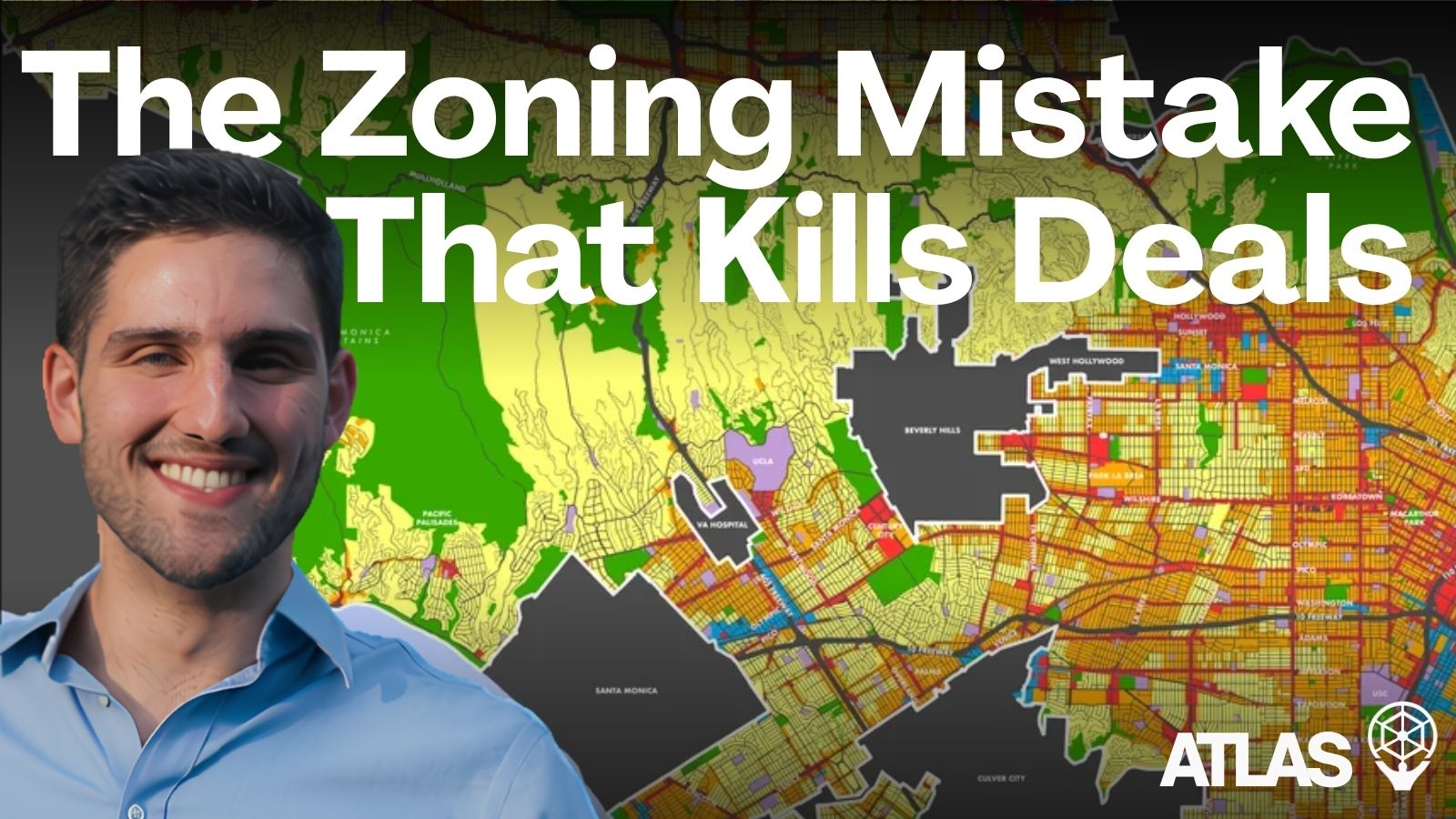
Zoning Real Estate Agent Los Angeles Expert: The Knowledge Gap Costing Investors Millions
Your agent can't read zoning codes.
That gap costs investors millions.
Most agents sell properties, not possibilities.
Zoning determines what you can actually build.
Here's why that knowledge is non-negotiable.
The 30-second answer: Zoning is the government rulebook—enforced by LA City Planning (LACP) and the Los Angeles Municipal Code (LAMC)—that dictates what you can build, how tall, how dense, and how much parking is required on any property. An agent who doesn't understand zoning can't tell you if your intended project is even legal, which leads to overpaying for restricted land, blown timelines, and six-figure variance costs discovered too late.
Real zoning literacy means reading height districts, FAR, setbacks, and overlay codes fluently—before you commit capital, not after. That's the difference between a true zoning real estate agent Los Angeles expert and someone who simply shows you listings.
What Is Zoning, Really?
Zoning is not a suggestion. It's a legal classification system that LA City Planning uses to control what happens on every parcel in the city, according to LA City Planning.
Every lot in Los Angeles falls into a category like R1 through R5 for residential, C1 through C4 for commercial, or M1 through M3 for industrial. Each designation controls permitted use, density, and building form. A parcel zoned for multifamily housing can command a significantly higher price than an identical single-family lot next door, simply because of what's legally allowed on it.
This is the foundation of any real Los Angeles zoning laws guide for agents. Without it, nothing else in a deal makes sense.
- Residential zones (R1–R5): Control density from single-family homes to high-rise apartments.
- Commercial zones (C1–C4): Govern retail, office, and mixed-use potential.
- Industrial zones (M1–M3): Dictate manufacturing, warehousing, and adaptive reuse eligibility.
How Zoning Drives City Approvals in Los Angeles
Here's what most agents get backwards. LACP determines whether your project is legal by-right, conditional, or outright prohibited—and only after that question is settled does the Los Angeles Department of Building and Safety (LADBS) review actual building code compliance.
Skip that order and you're building on sand. According to the National Association of Realtors, lenders meticulously scrutinize whether a property's intended use aligns with local zoning ordinances before releasing funds, which means a zoning mismatch can kill financing even after escrow opens.
In practice, the approval sequence looks like this:
- Zoning verification — Confirm the parcel's zone, height district, and any overlay codes with LACP before writing an offer.
- Entitlement review — Determine if the project is allowed by-right or requires a conditional use permit or variance.
- Plan check and permitting — LADBS reviews architectural plans against building and safety code.
- Permit issuance and construction — Only now can contractors legally break ground.
Miss step one, and everything after it is guesswork.
Building Capacity Fundamentals: Height, FAR, and Setbacks
Square footage on a listing sheet is not the same as buildable square footage. Height districts, Floor Area Ratio (FAR), lot coverage, and setback requirements together determine what a site is actually worth—not the number printed on a flyer.
FAR sets the maximum building area relative to lot size. A parcel with a 1.5:1 FAR on a 10,000-square-foot lot allows 15,000 square feet of building area, before setbacks and height limits even apply. Height districts then cap vertical development regardless of how much FAR remains unused.
"The listed square footage means nothing until you know what the zoning code actually allows you to build on it."
This is the single most expensive misunderstanding in commercial real estate.
This is exactly the kind of gap that shows up later in bad numbers. If you're evaluating a deal, cross-reference zoning capacity the same way you'd scrutinize rent roll and NOI red flags—both are places sellers and unqualified agents quietly inflate value.
Zoning's Ripple Effect on Architects, Permits & Contractors
Zoning constraints don't stay contained to the entitlement phase. They cascade through every downstream decision—design, permitting timelines, and construction sequencing all hinge on limits identified (or missed) upfront.
Nearly 60% of commercial real estate companies lack the data, processes, or controls needed to meet environmental and regulatory compliance requirements, according to industry research cited by Forbes. That statistic should worry anyone assuming their agent or broker has zoning fully handled.
Architects redesign around setback violations. Contractors requote when a conditional use permit adds months to the schedule. Lenders re-underwrite when a variance application stalls. Every one of these costs traces back to a zoning question that should have been answered before closing.
- Architects need confirmed height districts and FAR before drafting plans.
- Contractors need permit timelines locked before bidding labor and materials.
- Lenders need zoning-use alignment confirmed before releasing capital.
Speaking the Language: LAMC, LACP, LADBS
Fluency separates real experts from order-takers. If your agent can't explain the difference between a variance and a conditional use permit on the spot, they're not equipped to protect your capital.
A variance is required when a project violates a zoning standard outright—height, setbacks, or lot coverage, for instance. A conditional use permit is required when the intended use is only allowed in that zone with special approval, such as a bar in a commercial corridor. According to the American Planning Association, both processes typically involve public hearings, community input, and discretionary review timelines that can stretch three to six months.
Here's the terminology worth knowing cold:
- LAMC — Los Angeles Municipal Code, the legal text governing zoning citywide.
- LACP — Los Angeles City Planning, the agency enforcing LAMC and approving discretionary entitlements.
- LADBS — Los Angeles Department of Building and Safety, which reviews building code compliance and issues permits.
- Encroachment plane — A code restriction limiting how a structure's upper floors can extend near property lines.
An agent who moves fluidly between these terms isn't showing off. They're demonstrating the baseline competence a six- or seven-figure transaction requires.
Upcoming LA Zoning Shifts Every Investor Should Watch
Zoning isn't static, and 2025 has brought real momentum. Jurisdictions across the country, including parts of California, are piloting mixed-income zoning that blends market-rate and affordable units near transit and jobs, according to research tracked by Brookings.
Los Angeles specifically is leaning into a handful of trends that reward informed investors:
- Transit-oriented development (TOD) overlays — Density bonuses near major transit corridors are unlocking previously uneconomical projects.
- Adaptive reuse incentives — Warehouse and office-to-residential conversions are getting streamlined approval paths.
- ADU regulations — Accessory dwelling unit rules keep loosening, and this remains one of the most under-covered zoning trends agents can specialize in.
- Reduced parking minimums near transit — Fewer required spaces means more buildable square footage per lot.
Agents who track these shifts before competitors do are the ones who spot undervalued parcels first, as the Urban Land Institute has repeatedly noted in its research on emerging development trends. Being early on trending zoning topics like ADU regulations is still a near-zero-competition advantage for the agents willing to learn the code.
Real-World Example: The $2 Million Height District Mistake
An investor purchased a lot believing zoning allowed a 10-story mixed-use building. Their agent never checked the height district designation before writing the offer.
The parcel turned out to be Height District 1VL—capped at 45 feet, roughly four stories. The project's entire revenue model collapsed overnight.
The investor was left negotiating a costly variance with a three-to-six-month timeline and no guarantee of approval, based on the discretionary review standards outlined by LA City Planning. A zoning-literate agent would have flagged the height district before the offer was ever written, saving months of carrying costs and possibly the entire deal.
That's the real cost of hiring someone without a genuine commercial property zoning due diligence checklist. It isn't a paperwork inconvenience—it's the line between a viable project and a written-off investment.
Frequently Asked Questions
Why does my real estate agent need to understand zoning?
Because zoning determines what you can legally build, how tall, how dense, and how much parking is required—directly affecting approvals, permits, design, and project economics. An agent without zoning knowledge can't protect you from buying a property that can't support your intended use.
What is zoning and how does it affect real estate value?
Zoning is a set of government rules regulating permitted use, height, density, and parking for a property. Identical-looking parcels can have vastly different values depending on zoning; land zoned for multifamily typically commands a higher price than an identically sized single-family lot.
What's the difference between LACP and LADBS?
LACP enforces zoning rules and approves variances or conditional use permits, while LADBS reviews building code compliance and issues construction permits once zoning is confirmed. Understanding this sequence matters because skipping LACP review first can waste months of LADBS plan-check time.
Do I need a zoning variance or a conditional use permit for my project?
A variance is needed when your project violates a zoning standard like height or setbacks, while a conditional use permit is required when your intended use is allowed only with special approval in that zone. A zoning-savvy agent can tell you immediately which applies and how realistic approval is.
What zoning changes are coming to Los Angeles that investors should watch?
Key trends include expanded mixed-use requirements, adaptive reuse incentives for warehouse conversions, transit-oriented development overlays with density bonuses, and reduced parking requirements near transit. All of these can significantly improve project economics for informed investors.
Key Takeaways
- Zoning determines project viability before architects, contractors, or LADBS ever get involved—review it before you buy, not after.
- Height districts, FAR, lot coverage, and setbacks together decide the real economic value of a property, not just its listed size.
- Variances and conditional use permits can add $5,000–$50,000+ and three to six months to a timeline—an agent should flag this risk immediately.
- Upcoming LA zoning shifts, including TOD overlays, adaptive reuse incentives, and reduced parking near transit, are creating outsized opportunities for informed investors.
- An agent fluent in LAMC, LACP, and LADBS terminology isn't a luxury—it's a baseline requirement for any serious commercial real estate transaction.
Building that kind of fluency doesn't happen overnight. It comes from the same disciplined habits that separate serious operators from everyone else, the kind outlined for first-time founders who commit to mastering their field early rather than learning it the expensive way.
What to Do Next
Zoning literacy isn't optional in Los Angeles real estate—it's the line between a protected investment and a costly mistake. If you're planning a Los Angeles real estate investment or development this year, email odysseas@melissazeegroup.com for a strategic zoning consultation before you commit capital.
For more breakdowns like this one, follow @atlasnetwork.club on Instagram, where we share zoning updates, due diligence checklists, and real deal analysis. Share this article with anyone about to write an offer without checking the height district first.