Sherman Oaks Zoning Expert Insights: How Ventura Boulevard's Rezoning Is Reshaping Investment
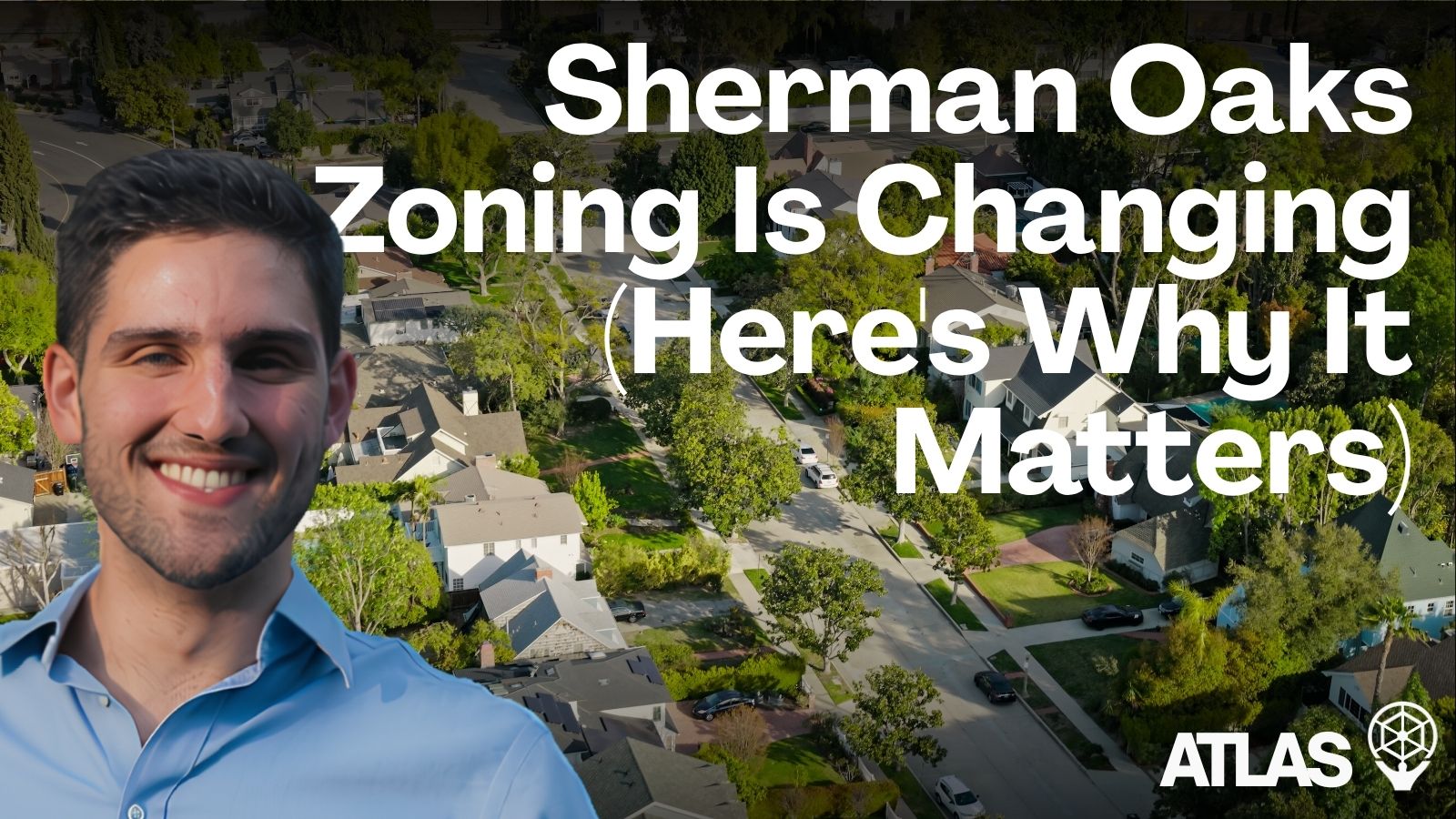
Sherman Oaks Zoning Expert Insights: How Ventura Boulevard's Rezoning Is Reshaping Investment
Sherman Oaks zoning is changing fast.
Most investors haven't noticed yet.
Ventura Boulevard is being rebuilt on paper first.
Single-use retail is quietly becoming obsolete.
The winners will be the ones who read the zoning map.
The 30-Second Answer
Sherman Oaks is shifting from car-dependent, single-use retail zoning toward mixed-use, transit-oriented development, especially along Ventura Boulevard. Parking requirements are dropping from roughly 1.5-2 spaces per 1,000 square feet to as low as 0.5-1, height limits are rising toward 75 feet in some corridors, and mixed-use projects are receiving density bonuses.
This means older single-use retail properties are losing relative value while mixed-use and TOD-eligible sites are gaining zoning-driven upside. A working Sherman Oaks zoning expert can help investors and agents identify redevelopment opportunities before the broader market fully prices them in.
The Big Zoning Shift Nobody's Pricing In Yet
Sherman Oaks is quietly transitioning away from suburban, single-use retail zoning. The community plan is pushing the neighborhood toward mixed-use, transit-oriented development, particularly along its commercial spine.
Median sale prices in the 91423 zip code are holding near $1.65 million, up slightly year over year. But that headline number hides a much bigger story happening at the zoning-code level.
According to McKinsey & Company, cities that pair zoning reform with transit investment see faster infill development and stronger long-term asset appreciation than cities that don't. Sherman Oaks is now one of those cities. Los Angeles's own general plan consistency measures project population growth near 10.96% for the area, which only accelerates the pressure to rezone.
Ventura Boulevard's Transformation, Parcel by Parcel
Ventura Boulevard has long been defined by C2 and CR strip-mall zoning: single-story retail, deep setbacks, and surface parking lots. That model is being phased out.
New Ventura Boulevard mixed-use development zoning incentives allow taller buildings, reduced setbacks, and residential density above ground-floor retail. Height allowances are trending toward 75 feet in key nodes, a dramatic jump from the two-story strip centers that still dominate the corridor today.
Urban Land Institute research shows mixed-use corridors consistently outperform single-use retail corridors on long-term rent growth and vacancy resilience. That's a meaningful signal for anyone doing commercial property Sherman Oaks investment analysis right now. If you're also evaluating existing income assets along the corridor, it's worth reviewing Commercial Property Red Flags in Rent Roll and NOI before assuming current rent rolls reflect future zoning-adjusted value.
Parking Requirement Changes Are the Hidden Financial Lever
Parking minimums sound like a bureaucratic detail. In practice, they're one of the biggest financial levers in Los Angeles development today.
A property that once needed 1.5-2 parking spaces per 1,000 square feet may now only need 0.5-1. That difference can eliminate hundreds of thousands of dollars in construction costs on a single mid-size project.
Here's why this matters in practice:
- Fewer spaces means more buildable square footage — land once dedicated to surface parking can become leasable retail or residential space.
- Lower parking costs improve loan-to-value math — banks underwrite based on project cost versus projected income, and parking reduction directly improves that ratio.
- Faster approvals follow simpler site plans — projects with less parking to justify often move through LADBS review faster.
Zoning expertise reduced redesign costs by nearly $40,000 and cut roughly six months from an expected approval timeline on one recent multi-family project, according to industry zoning consultants. That's not a rounding error — that's the difference between a deal penciling and a deal dying in underwriting.
"The single biggest line item most investors overlook isn't the purchase price — it's the parking requirement buried in the zoning code."
That number alone can decide whether redevelopment pencils out.
Residential Zoning Patterns Still Favor Transition Zones
Most of Sherman Oaks remains zoned R1, which limits density and keeps large swaths of the neighborhood locked into single-family use. That's not changing overnight, and Harvard Business Review has noted that entrenched single-family zoning is one of the slowest-moving forces in American housing policy.
But the R2 and R3 transition zones near commercial corridors tell a different story. These parcels sit close enough to Ventura Boulevard to benefit from mixed-use spillover while still allowing multi-family development economics that R1 simply doesn't permit.
Community input still shapes how these transition zones get approved in practice, not just how they're written on paper. Neighborhood councils and HOA feedback loops carry real weight in Los Angeles zoning general plan consistency hearings, which is part of why Why Community Support Predicts Long-Term Success is relevant reading for anyone trying to move a project through entitlement.
TOD and Mixed-Use Opportunity Zones
Transit-oriented development, or TOD, is where the real Sherman Oaks investment ADU opportunities and mixed-use upside are concentrating. Properties near Metro lines and high-frequency bus routes qualify for parking reductions and density bonuses that other parcels simply can't access.
The Federal Transit Administration has repeatedly linked transit-adjacent zoning flexibility to higher infill development rates in major metro areas. Los Angeles is applying that same logic to the transit-oriented development Ventura Boulevard corridor strategy right now.
What makes a site TOD-eligible in practice:
- Proximity to a Metro rail station or a designated high-frequency bus corridor.
- Location within a community plan area that specifically allows density bonuses.
- Zoning that already permits mixed-use or has a clear path to a zone change.
- Lot size sufficient to make underground or reduced-footprint parking viable.
Investors chasing Sherman Oaks ADU construction zoning opportunities are also finding that TOD-adjacent lots make backyard and above-garage ADUs significantly more valuable as standalone rental units, not just accessory space.
Red Flags vs. Green Flags in Sherman Oaks Zoning
Not every commercial parcel on Ventura Boulevard is a hidden opportunity. Some are simply declining assets dressed up as value plays.
Red flags to watch for:
- Single-use retail with high, unreduced parking requirements and no path to a zone change.
- Properties in hillside overlay districts with restrictive height and grading limits.
- Parcels more than a half-mile from any transit corridor or Metro connection.
- Long-term leases locked at below-market rents with no near-term renegotiation clause.
Green flags worth pursuing:
- Parcels within designated TOD or mixed-use overlay zones.
- Sites where current improvements are underbuilt relative to allowable density.
- Corner lots or larger parcels where reduced parking minimums meaningfully change the buildable envelope.
Forbes has covered this exact dynamic nationally: zoning-driven upside almost always shows up before market pricing catches up, which is precisely the window investors want to be in. Running a real commercial property Sherman Oaks investment analysis means checking the zoning code before checking the rent roll.
A Real-World Example: The Strip Mall That Zoning Rewrote
A 20,000 square-foot aging strip retail property on Ventura Boulevard historically required 30-40 parking spaces. Providing that much parking cost between $400,000 and $600,000 in site improvements alone.
Under updated zoning, the same property may only need 10-20 spaces. That single change saves an estimated $250,000-$300,000 in development cost.
That savings is often the difference between a property staying an aging strip mall forever and becoming a financially viable mixed-use redevelopment site. It wasn't a market cycle that unlocked the value — it was a change in the zoning code. According to Curbed LA, similar parking-driven conversions are already reshaping other Los Angeles commercial corridors, and Ventura Boulevard is following the same pattern.
Frequently Asked Questions
What is the zoning in Sherman Oaks?
Sherman Oaks has a mix of residential zones (R1 through R5) and commercial zones (C1 through C4), with Ventura Boulevard serving as the commercial core. That corridor is increasingly zoned to support mixed-use development rather than the single-use retail it was historically built around.
Is Sherman Oaks a good real estate investment?
It depends heavily on zoning. Mixed-use and transit-oriented development properties have strong upside, while single-use retail properties with high parking requirements are declining in relative investment value according to current National Association of Realtors commercial trend data.
Can you build mixed-use development in Sherman Oaks?
Yes, especially along Ventura Boulevard and near other commercial corridors. Parking reductions, height bonuses, and density incentives now favor mixed-use projects over traditional single-use retail in most zones.
What are the current parking requirements in Sherman Oaks?
Requirements vary by zone but have generally dropped from a historical 1.5-2 spaces per 1,000 square feet to as low as 0.5-1 space per 1,000 square feet. That reduction significantly improves mixed-use project economics.
What properties should investors avoid in Sherman Oaks?
Avoid single-use retail with high parking requirements, parcels in restrictive hillside overlays, and sites far from transit. These properties consistently lose out on the zoning bonuses and density incentives driving current appreciation.
Key Takeaways
- Sherman Oaks zoning is actively shifting from car-dependent retail to mixed-use, transit-oriented development.
- Reduced parking requirements are the biggest hidden economic driver, saving developers hundreds of thousands per project.
- R2/R3 transition zones and TOD-eligible properties near transit offer the best development economics in the market today.
- Single-use retail with outdated, parking-heavy zoning is becoming an economically disadvantaged asset class.
- Investors and agents who understand community plan direction can identify redevelopment upside before the broader market catches on.
What to Do Next
Zoning maps move slower than headlines, which is exactly why they're worth reading closely right now. The Sherman Oaks story isn't finished — Ventura Boulevard's transformation is still in its early innings, and the parcels that benefit most haven't been fully repriced yet.
If you're evaluating Sherman Oaks zoning, commercial property, or development potential this year, email odysseas@melissazeegroup.com for a strategic consultation before you invest.
Want more breakdowns like this one? Follow @atlasnetwork.club on Instagram for ongoing zoning updates, market analysis, and investment insights, and share this article with anyone evaluating property along Ventura Boulevard.